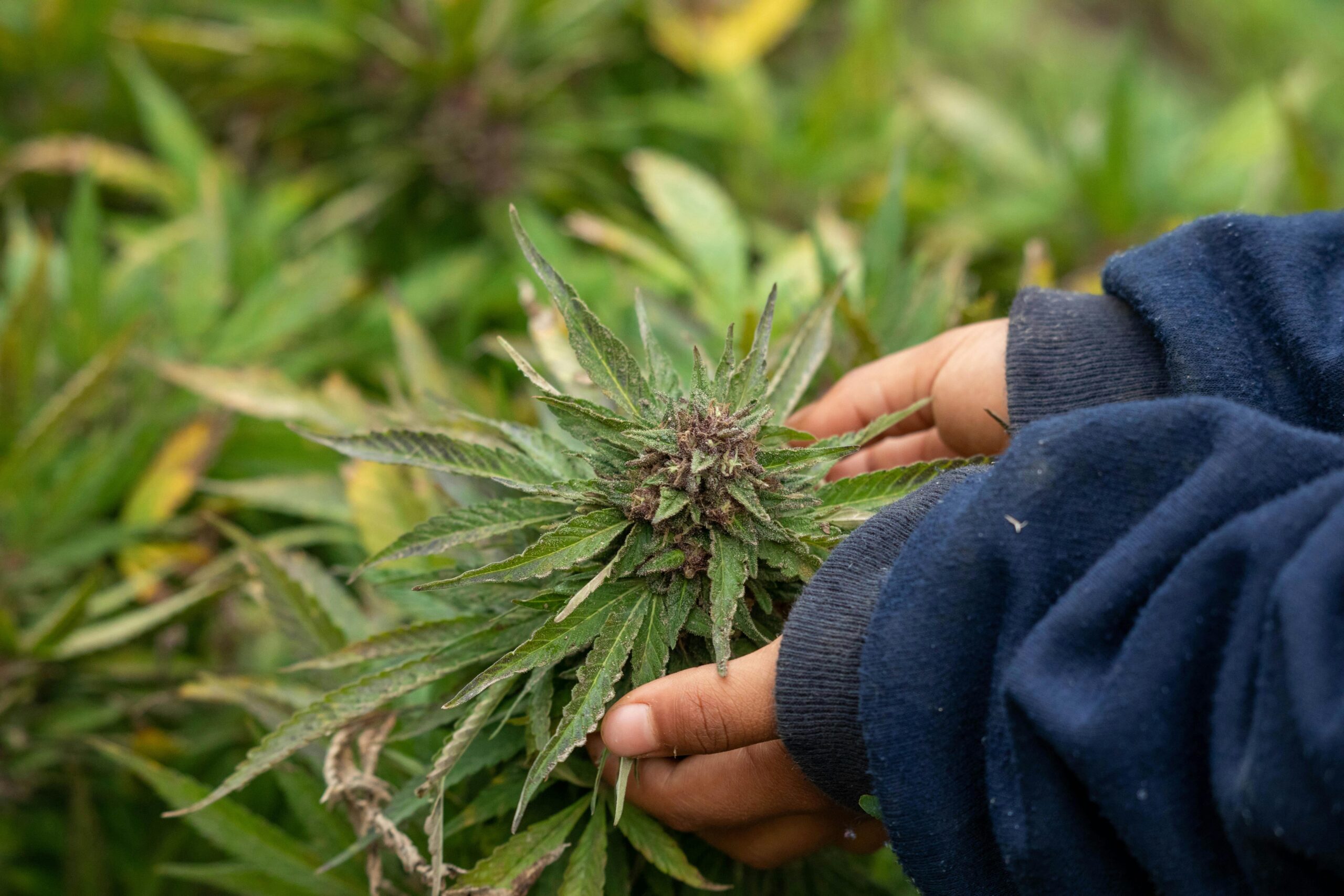
One of the most important phases in cannabis production is harvesting. The buds’ overall quality, strength, and scent are all directly impacted by the timing. While harvesting too late can result in overripe buds that provide a heavy, drowsy high or even deteriorate in quality, harvesting too early can result in poor effects and lower yields. Harvesting at the right time guarantees that you will get the flavor and effects you want.
How Do You Know When To Harvest Cannabis
Step-by-Step Guide: How to Know When to Harvest Cannabis
Step 1: Observe the Pistils (Hairs)
When cannabis is almost ready for harvest, the pistils—tiny, hair-like strands that emerge from the buds—are the first thing most farmers notice. Pistils are straight and dazzling white at the beginning of flowering. These hairs gradually darken, turning brown, red, or orange, and curl inward as the plant ages. It is generally accepted that a plant is ripe for harvesting when 70–90% of the pistils have changed color. However, because pistils might darken prematurely due to environmental stress, they shouldn’t be your only signal.
Step 2: Examine the Trichomes (Resin Glands)
The most reliable method of determining harvest time is by inspecting the trichomes—the tiny, mushroom-shaped crystals covering the buds and leaves. These trichomes contain the cannabinoids (THC, CBD, CBN) and terpenes responsible for the plant’s effects and flavor. Using a jeweler’s loupe or digital microscope, look closely at the trichomes:
-
Clear trichomes mean the plant is still immature.
-
Cloudy or milky trichomes indicate peak THC levels for a more uplifting, cerebral high.
-
Amber trichomes suggest THC has begun converting into CBN, resulting in a heavier, sedative effect.
Most growers aim for a mix of mostly cloudy with some amber trichomes, depending on their preferred effect.
Step 3: Check the Fan Leaves and Overall Plant Health
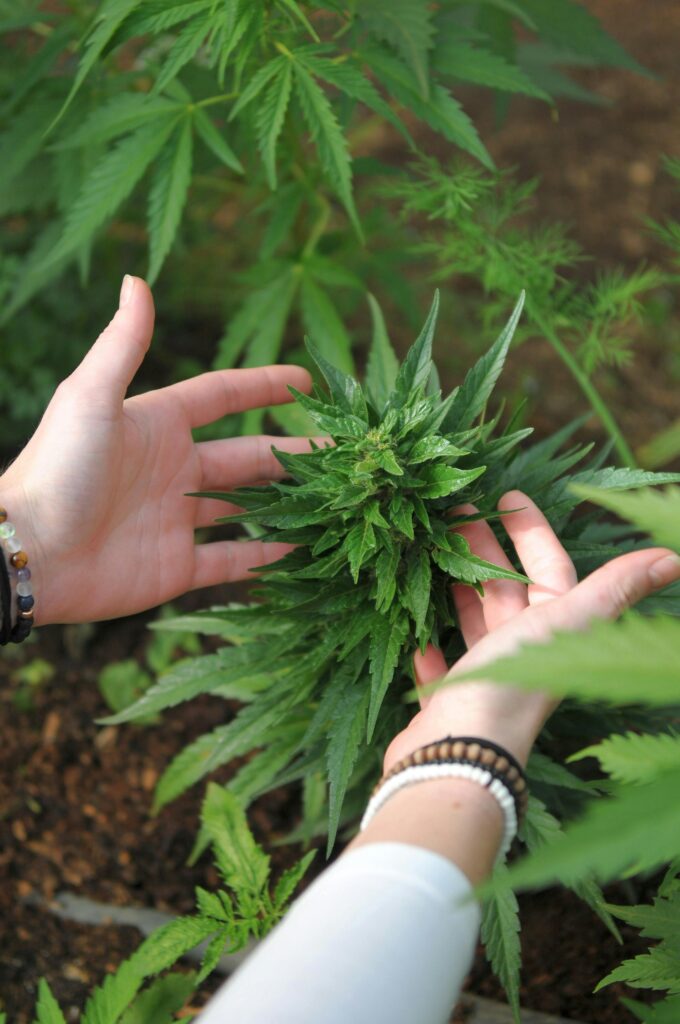
The plant starts to shift its energy from leaves to bud development as harvest draws near. The big fan leaves frequently turn yellow, curl, or fall off on their own as a result of this. Yellowing leaves during late flowering typically mean the plant is almost done with its life cycle, yet they can also occasionally be a symptom of nutrient inadequacies. At harvest, a healthy plant will have rich, resinous buds but withering leaves.
Step 4: Pay Attention to Bud Density and Aroma
Mature cannabis buds will feel thick, sticky, and firm to the touch, unlike younger buds that are light and airy. Alongside density, the aroma becomes stronger and more pungent as harvest time approaches. Different strains will have unique scents—fruity, earthy, skunky, or sweet—but in general, if your plant smells noticeably stronger than before, it is signaling that the terpenes are fully developed and ready for harvest.
Step 5: Consider Strain and Growing Environment
The rate at which cannabis strains mature varies. Sativas can blossom for 10–12 weeks or longer, whereas indicas often end 7–9 weeks sooner. Regardless of the light cycle, auto flowers mature swiftly and are frequently available 8–10 weeks after seeding. Seasonal variations also affect outdoor plants; in the Northern Hemisphere, harvest usually occurs in September or October. When determining when to harvest, always take strain genetics and growth conditions into consideration.
Step 6: Avoid Common Mistakes
Many beginners make the mistake of harvesting too early because the buds look big and appealing. Others harvest too late, letting THC degrade into less desirable cannabinoids. Another common error is relying only on breeder-provided timelines, which are estimates and may not reflect your specific growing conditions. The best approach is to combine multiple indicators—pistils, trichomes, leaf health, bud density, and aroma—to make a well-informed decision.
Step 7: Prepare for Harvest
After you’ve established that the timing is appropriate, planning is essential. To ensure a smoother taste when smoking, many growers rinse their plants with plain water around two weeks prior to harvest in order to remove superfluous nutrients. Before cutting, some people also leave the plants in the dark for 24 to 48 hours, saying this improves the production of resin.
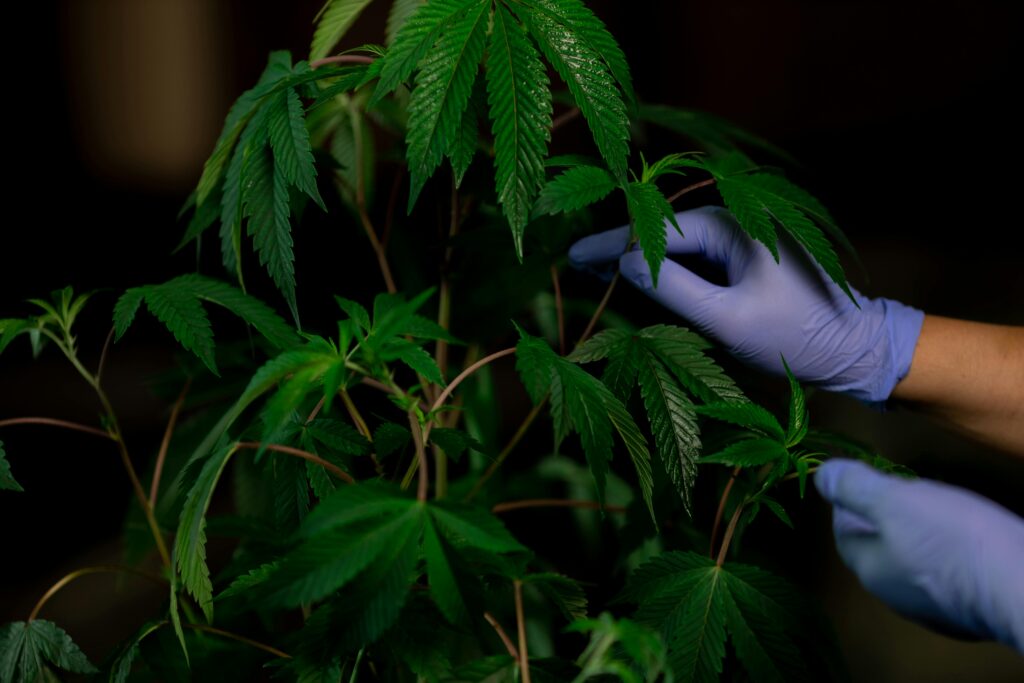
The way you manage the buds right after harvest is just as crucial as the actual harvest time, so make sure you have a tidy workspace, cutting scissors, gloves, and a drying setup available.
Additionally, It is also important to take note of the following :
I). Understanding the Cannabis Life Cycle
Depending on the strain, growing conditions (indoor vs. outdoor), and whether it is a photoperiod or auto flowering variety, the cannabis plant’s life cycle (Cannabis sativa or Cannabis indica) is an annual process, meaning it completes its growth from seed to harvest within one growing season, usually lasting 3 to 8 months. Auto flowers develop automatically according to age, whereas photoperiod strains depend on light cycles to change phases. The cycle can be broken down into multiple important phases which are:
germination, seedling, vegetative, pre-flowering (sometimes considered part of vegetative or flowering), flowering (which may be subdivided into early, mid, and late), and post-harvest processes like harvesting, drying, and curing. Each stage has unique characteristics, durations, and care requirements to optimize plant health, yield, and cannabinoid potency (e.g., THC and CBD levels). Let us take a keen look into each of the stages and elaborate accordingly, drawing from established horticultural practices.
1. Seed Storage (Dormancy)
- Time Frame: Seeds can remain viable for 10-15 years if stored properly, though dormancy naturally decreases over a few months after harvest.
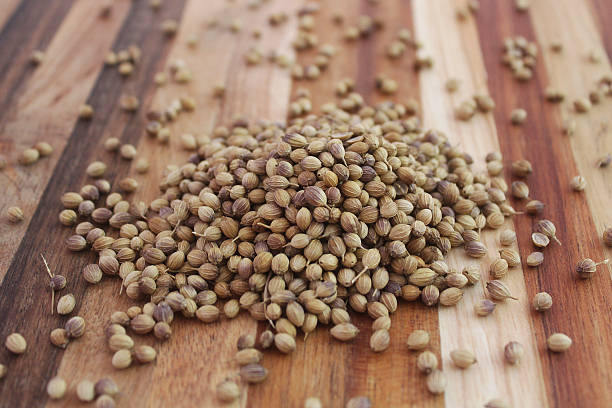
- Features: Freshly harvested seeds enter a dormant state to prevent premature sprouting, mimicking natural seasonal cycles. They are small, hard, dry, and typically light to dark brown when mature. Immature seeds (soft, white, or green) are unlikely to germinate.
- Care Instructions: Store in airtight, tinted glass jars with desiccant packs in a refrigerator at cool, dry, and dark conditions (around 40-50°F or 4-10°C). Allow the container to reach room temperature before opening to prevent condensation and mold. Some breeders use cold stratification (refrigerating for weeks) to simulate winter and boost germination rates to over 95%. Avoid freezing, as it can damage seeds.
2. Germination
- Time frame: 2–10 days, occasionally up to 2 weeks.
Features: During this awakening phase, the stem pushes upward while the seed collects water, softens its shell, and develops a taproot (radicle) that points downward for anchoring. The first genuine leaves with serrated edges appear after the first cotyledon leaves (spherical, non-serrated) emerge to catch light. Mature seeds are necessary for successful germination, which sets off hormonal changes that promote the growth of roots and shoots.
Care Instructions: Place seeds in a covered container with damp paper towels or in a dark, moist area like a glass of room temperature water. To stop rot, keep the temperature between 70 and 80°F (21-27°C) and refrain from oversoaking. Only oxygen and water are required at this time, not nutrition. Use a 0.5–1% hydrogen peroxide solution for 16–24 hours for better results.
3. Seedling
- Time Frame: 2-3 weeks after germination.
- Features: The plant is fragile and squat, with a small root system. Cotyledons provide initial energy via stored nutrients until true leaves (starting with 1-3 blades, progressing to 5-7) enable photosynthesis. Leaves grow in opposite pairs with serrated edges, and the plant reaches 2-6 inches tall. Vibrant green color indicates health; yellowing or browning suggests issues.
- Care Instructions: Provide 18-24 hours of light daily (e.g., fluorescent tubes at 200-400 PPFD) in a humid environment (65-75% relative humidity) at 70-80°F (22-27°C). Water sparingly to keep soil moist but not soggy, avoiding overwatering that could drown roots. Use light, well-draining soil or hydroponic setups with minimal nutrients (e.g., low-strength seedling formulas in coco fiber). Transplant to larger pots once rooted, and monitor for stretching (leggy growth) by adjusting light distance.
4. Vegetative Growth
- Time Frame: 3-15 weeks, adjustable for photoperiod strains; shorter (1-4 weeks) for auto flowers.
- Features: Rapid expansion occurs as the plant builds structure: stems thicken, height increases (up to 2-3 feet or more), branches and nodes proliferate, and leaves grow larger (up to 13 blades). Roots expand extensively, and node spacing varies by strain (tighter for indicas, wider for sativas). No buds form yet; energy focuses on foliage and biomass.
- Care Instructions: Switch to an 18/6 light cycle (18 hours light, 6 hours dark) or 24/0 for indoors, increasing intensity to 400-600 PPFD. Provide nitrogen-rich nutrients, more water (warm and farther from the stem to reach root tips), and 60-70% humidity at 70-80°F (22-27°C). Allow soil to dry between watering for oxygen access. Train plants (e.g., topping, low-stress training, or SCROG netting) to control height and promote even canopy. Prune shaded lower leaves for better airflow and pest prevention.
5. Pre-Flowering
Time Frame: 1-2 weeks, often overlapping with late vegetative.
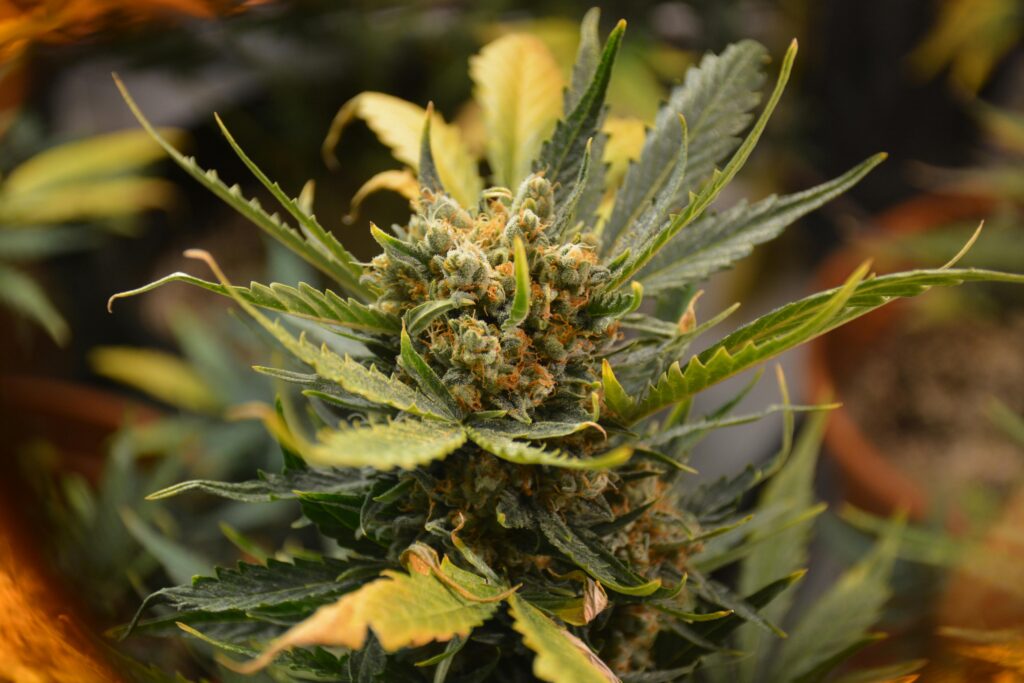
- Features: Plants reach 14-20 inches with 8-10 nodes, and sex becomes identifiable at nodes: females show white pistils (hairs), males develop pollen sacs, and hermaphrodites have both. This stage signals readiness for flowering, with alternating leaf growth.
- Care Instructions: Reduce light to 12/12 to induce flowering in photoperiod strains. Cull males and hermaphrodites to prevent pollination, which reduces female bud quality. Use feminized seeds or genetic testing for assurance. Maintain 55-70% humidity and monitor for stress that could trigger intersex traits.
6. Flowering
- Duration: 7-14 weeks, subdivided into early (weeks 1-3: stretching and bud formation), mid (weeks 4-6: bud swelling and resin increase), and late (weeks 7+: maturation).
- Characteristics: Triggered by 12/12 light cycles, plants stop vegetative growth and focus on reproduction. Females produce sticky buds (colas) with pistils turning from white to orange/reddish. Trichomes (resin glands) evolve from clear to milky (peak THC) to amber (higher CBD). The plant may double in height during the initial stretch, and aromas intensify.
- Care Tips: Use high-phosphorus/potassium, low-nitrogen bloom nutrients. Increase light to 600-900+ PPFD, with 50-60% humidity and 72-84°F (22-29°C) to prevent mold. Water more during stretch but taper off later. Harvest based on trichome color (50-70% milky for balanced effects) and pistil ratio. For auto flowers, this starts automatically around 4-6 weeks from seed.
7. Harvesting, Drying, and Curing
- Duration: Harvesting is immediate; drying takes 7-14 days; curing lasts 1-8 weeks (or longer for best results).
- Characteristics: Cut the plant when ready, focusing on bud ripeness. Drying removes moisture slowly, while curing enhances flavor, potency, and smoothness by breaking down chlorophyll.
- Care Tips: Harvest in a dark room, trimming branches and hanging upside down at 40-50% humidity and 60-70°F (15-21°C). Dry until stems snap, not bend. Cure in airtight jars, burping daily for the first week to release gases. Store in cool, dark places for up to 6 months to refine terpenes and cannabinoids. Use air filtration throughout to prevent mold and odors.
II). Key Signs Cannabis is Ready to Harvest
-
Pistils (Hairs): The buds are typically ready for harvesting when 70–90% of the white pistils have darkened and curled inward.
-
Trichomes (Resin Crystals): These tiny mushroom-like glands change from clear → cloudy → amber, signaling maturity.
-
Leaves: As the plant transfers energy to the buds, fan leaves frequently turn yellow and eventually die off.
-
Bud Density & Aroma: Mature buds feel sticky, dense, and give off a strong, pungent smell.
III). Tools to Help you decide Harvest Time
To determine the optimal cannabis harvest time, focus on tools that assess trichome color (clear to milky to amber), pistil development (70-90% orange/red), and bud maturity. Here’s a concise summary of key tools:
- Jeweler’s Loupe (30x-60x): Handheld, affordable ($5-$20), for quick trichome checks. Look for 50-70% milky trichomes.
- Digital USB Microscope (50x-1000x): Connects to devices for detailed trichome imaging ($20-$50). Best for photos and tracking.
- Handheld Microscope (60x-100x): Portable with LED, clearer than loupes ($10-$30).
- Smartphone Macro Lens: Clip-on for close-up pistil/trichome photos ($10-$25).
- Thermo-Hygrometer: Monitors humidity (50-60%) and temperature (72-84°F) to optimize ripening ($10-$30).
- Light Meter (PPFD): Ensures proper light intensity (600-900+ PPFD) for indoor grows ($30-$100).
- Strain Guides/Apps: Seed bank data or apps like Leafy estimate flowering times (7-14 weeks).
- Cannabinoid Test Kits: At-home kits ($50-$150) or lab services ($100+/test) for precise THC/CBD levels.
III). Strain-Specific Considerations

-
Indica Strains: Usually, it is ripe 7–9 weeks after flowering. More amber trichomes may be preferred by growers because of their tendency toward calming effects.
-
Sativa Strains: Take longer, 10–12 weeks, and are often harvested with more cloudy trichomes for an uplifting high.
-
Auto flowers: It typically takes 8–10 weeks from seed to completion, irrespective of the light cycle.
IV). Environmental and Growing Conditions
Indoor Growers: Trichomes and pistils are mostly responsible for harvest timing because you have control over the light cycle.
Outdoor Grows: Timing depends on local climate. Watch for seasonal shifts—shorter days, cooler nights, and potential rain can all affect harvest.
Risks associated with weather: To minimize mold and bud rot, outdoor producers should refrain from harvesting during periods of intense rain or frost.
IV). Common mistakes in cannabis harvest timing
Below are the common mistakes in cannabis harvest timing which can compromise potency, flavor, and yield :
- Harvesting Too Early: Cutting before trichomes are 50-70% milky reduces THC and flavor. Fix: Use a 30x-60x loupe to confirm milky trichomes; wait 1-2 weeks if clear.
- Harvesting Too Late: Waiting until most trichomes are amber (>30%) degrades THC to CBN, making buds sedative. Fix: Harvest at 10-30% amber for desired effects.
- Ignoring Trichomes: Relying only on pistils or schedules misses peak potency. Fix: Prioritize trichome checks with a loupe/microscope, cross-check with 70-90% orange pistils.
- Neglecting Environment: High humidity (>60%), low light (<600 PPFD), or heat (>85°F) delays ripening or causes mold. Fix: Use a thermo-hygrometer and light meter to maintain 50-60% humidity, 72-84°F.
- Misjudging Strain Timelines: Assuming all strains (e.g., auto flowers vs. photoperiods) ripen similarly. Fix: Check strain-specific guides (e.g., Leafy, seed banks) for accurate timelines.
- Overlooking Stress: Nutrient issues, pests, or light leaks skew ripening. Fix: Address health issues; confirm readiness with magnification.
- Inconsistent Monitoring: Guesswork or infrequent checks miss the harvest window. Fix: Inspect trichomes/pistils every 2-3 days; log progress.
V). Preparing for Harvest
Flushing: Use only water and cease nutrient feeding two weeks prior to harvest. In order to produce smoother-tasting buds, this eliminates chemical accumulation.
Dark Period (Optional): To increase the production of resin, some farmers leave their plants in the dark for 24 to 48 hours before chopping.
Cleaning Tools & Space: Ensure you have sharp scissors, gloves, and a clean drying area ready.
In conclusion
Cannabis harvesting is a science and an art. Experience and instinct are also important, even if trichomes and pistils provide unmistakable biological cues. You may harvest at the precise moment that yields the potency, flavor, and effects you desire—whether they be balancing, uplifting, or deeply calming—by learning to read your plant’s cues.